Sustainability Starts in the Saddle
Rhine-Waal University of Applied Sciences has been committed to sustainability, resource conservation, and the responsible use of public funds for many years. Ambitious goals! And sometimes they begin in surprisingly down-to-earth ways.
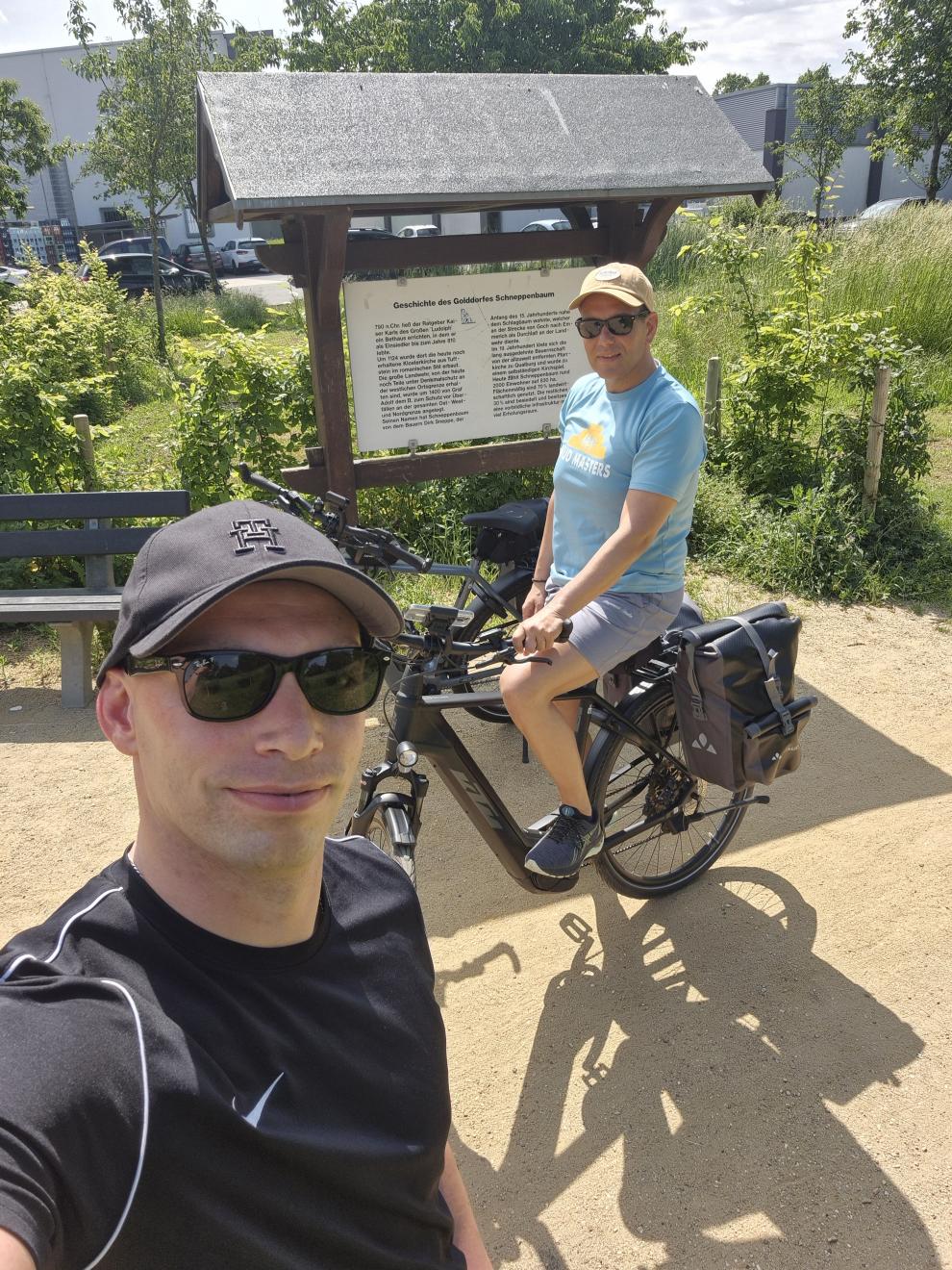
As part of the long-standing international cooperation project with The Hague University of Applied Sciences, the traditional final event in The Hague took place at the beginning of June. While the students presented their innovative HR concepts, the project leaders, Philipp Schorn and Fabian Dargel, took on a challenge of their own: Travelling to The Hague by bike.
168 kilometers one-way!
And since sustainability is, of course, not a one-way street, they also cycled back after the presentations. That adds up to a total of 336 kilometers by bike.
The positive side effect: No travel expenses were incurred for the university. No train tickets, no mileage reimbursement, no parking fees. Instead, there was plenty of fresh air, a fair amount of headwind, the occasional moment of self-doubt, and ultimately the satisfaction of having made a small contribution to sustainability and cost efficiency.
Of course, this is not intended to become a new standard for business travel. No one is suggesting that future project proposals should include a category called “travel by bike”. Nevertheless, this example illustrates that sustainability is not only something that belongs in strategic plans, mission statements, or project applications. It can also be reflected in personal decisions and individual actions.
This leads to two perhaps slightly provocative questions: If, as a university, we regularly emphasize sustainability and cost efficiency as key priorities, what is the organization doing to make sustainable choices more attractive and convenient for its employees? Dedicated charging stations for e-bikes and secure bicycle storage facilities would certainly be a good start. And the second question is for all of us: What concrete contribution does each individual make towards these goals? Cycling 336 kilometers is certainly not the only answer. But perhaps it is food for thought.